

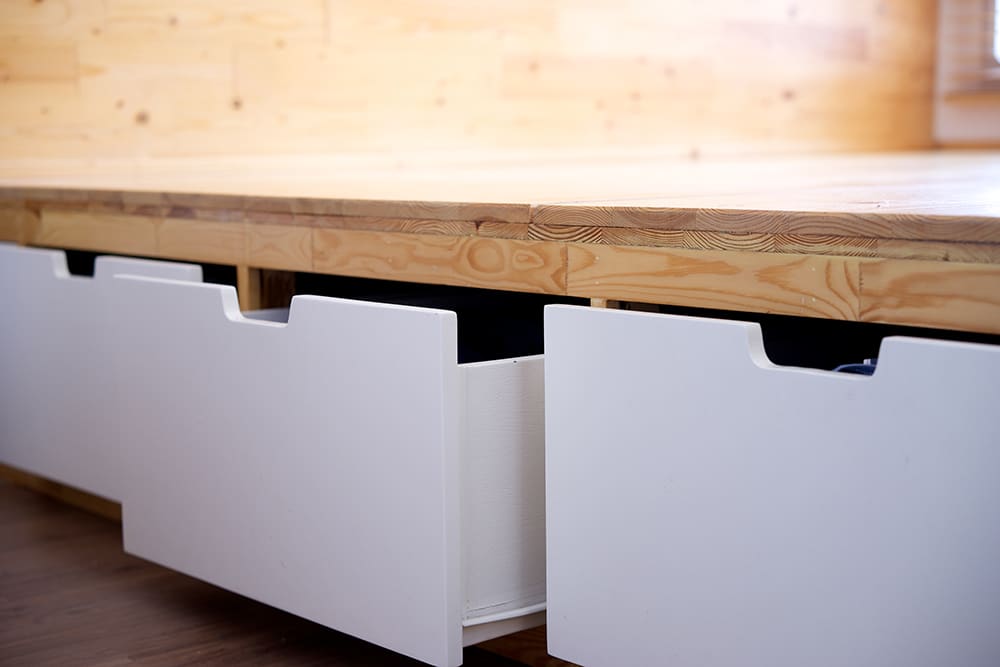
That much food requires some thought as to where to put it even if it means putting it under your bed & sleeping a little higher up than before.
Start With The Basics
Creating a 2 month food supply can seem overwhelming. Start with the basics. Get beans & rice unless your family cannot eat beans or rice in which case decide on an alternative to these basics. Then get items that you can obtain in bulk or on sale that is packaged in such a way so it can store for a long period of time. If one has the means there are websites that sell food storage items that will last up to 25 years. Above all only buy items that your family will eat. If you decide to preserve your own food please be careful to follow canning or food preserving techniques carefully. Improper food canning can prove fatal if done improperly.
A very important consideration is Water
Water is one of the most important items to have in a food supply as well as in a 72 hour pack, but it is one of the most difficult items to store because even water goes bad after it is left in storage and becomes unsafe to drink, although it still has other uses even when it is not drinkable, & also water expands when it freezes which causes some containers to burst when the weather gets too cold even in Tucson. You can take heart that it is a good thing that water which is the molecule (H2O) expands when changing state from liquid to solid (freezes). Because water expands when freezing ice is less dense than water so it floats & therefore forms on top of lakes & oceans rather than at the bottom which it would form at the bottom if water compressed rather than expanded when freezing. If ice formed on the ocean floors almost all food on those ocean floors would die during freezing. That would cause all ocean bottom feeding creatures to die which in turn would eventually cause pretty much everything in the oceans to die & that would carry over to a serious problem for all life on earth not to mention what would happen to the polar caps & rain.
So even though it is a challenge to keep water from freezing so the containers do not burst just remember it is for the greater good that water does expand when freezing.
There are numerous ways to store water just remember water does not store forever.
Water will go bad in time so it must be rotated unless it is in sealed containers, but even then note the expiration date on the container.
A suggested list of items
- Water (lots of water)
- Wheat
- Cracked wheat
- Flour
- Baking powder
- Yeast (active dry)
- Bisquick mix (pancake)
- Cake mixes
- Soda
- Corn starch
- Cocoa
- Gelatin (sweet or unsweetened)
- Corn meal
- Drink mixes
- Powdered milk
- Salt
- Pepper
- Seasonings
- Sugar
- Brown sugar
- Powdered sugar
- Rice
- Beans (pinto or navy)
- Eggs (whole solid powdered)
- Peas (canned or dehydrated)
- Sting beans
- Pork & beans
- Corn vanilla
- Maple flavoring
- Peanut butter
- Vinegar
- Apple butter
- Bottled fruit
- Jams
- Jellies
- Tomato crystals
- Lemon crystals
- Grapefruit crystals
- Orange crystals
- Pineapple crystals
- Soups (liquid canned or dehydrated)
- Canned meats (including sandwich spreads)
- Carrots
- Spinach
- Beets
- Garbage
- Asparagus
- Tomatoes
- Tomato juice
- Potatoes (dry)
- Hominy
- Spaghetti (dry)
- Spaghetti (dinner or canned)
- Baked beans
- Macaroni (dinner or canned)
- Beef stew
- Onions (minced)
- Bouillon (beef or varied cubes)
- Cheese (powdered cheddar)
- Margarine
- Applesauce
- Apples (dehydrated)
- Apricots (dehydrated)
- Raisins
- Yam flakes
- Peaches (dehydrated)
- Pears (dehydrated)
- Honey
- Shortening (regular or liquid oil)
- Ammonia
- Lysol disinfectant
- Toilet tissue
- Kleenex
- Vitamins
- Ascorbic acid
- Deodorant
- Shaving cream
- Razor blades
- Tooth paste (powdered)
- Toothbrush
- Hair crème
- Shampoo
- Combs
- Shoe laces
- First aid equipment (see separate list)
- Oysters
- Salmon
- Tuna
- Deviled meat
- Beef jerky (dried)
- Soap (hand)
- Soap (washing)
- Detergent
- Soap (for dishes)
- Bleach
- Cleanser
- Bowl cleaner
- Saw
- Nails
- Screws
- Flash light
- Batteries
- Water purification tablets
- Bottled water
- Water container (large)
- Coal stove
- Coal
- Kindling wood
- Coke cubes
- Blankets
- Pillows
- Gun shells
- Radio
- Newspapers
- Wheat grinder
- Can opener
- Bottle opener
- Bucket
- Dropper (measuring)
- Cooking utensils
- Waste baskets (metal containers)
- Garbage cans (with lids)
- Grocery bags
- Towels
- Sanitary napkins
- Disposable diapers (for babies)
- Cleaning fluids
- Matches (book)
- Needles
- Thread
- Buttons
- Scissors
- Candles
- Paper plates
- Paper cups
- Heat cubes
- Hammer
- Ax
- Baby supplies (bottles, etc.)
- Deodorants (liquid, powered)
- Clothing
- Sheets
- Rope
- Personal toilet items
- Coleman stove
- Coleman lamp
- White gas
- Ice storage chest
- Clean rags
- Scrubbing brush
- Broom
- Pencils
- Paper
- Transistor radio
- Pamphlets on emergency instructions
Basic Supplies
a standard first-aid kit may contain many of these items:
- Adhesive tape
- Elastic wrap bandages
- Bandage strips & ‘butterfly’ bandages in assorted sizes
- Super glue
- Rubber tourniquet or 16 French catheter
- Nonstick sterile bandages & roller gauze in assorted sizes
- Eye shield or pad
- Large triangular bandages (may be uses as a sling)
- Aluminum finger splint
- Instant cold packs
- Cotton balls & cotton-tipped swabs
- Disposable non-latex examination gloves, several pairs
- Duct tape
- Petroleum jelly or other lubricant
- Plastic bags, assorted sizes
- Safety pins in assorted sizes
- Scissors & tweezers
- Hand sanitizers
- Antibiotic ointment
- Antiseptic solution & towelettes
- Eyewash solution
- Thermometer
- Turkey baster or other bulb suction device for flushing wounds
- Sterile saline for irrigation, flushing
- Breathing barrier (surgical mask)
- Syringe, medicate cup of spoon
- First-aid manual
- Hydrogen peroxide to disinfect
- Aloe vera gel
- Calamine lotion
- Anti-diarrhea medication
- Laxative
- Antacids
- Antihistamine, such as diphenhydramine
- Hydrocortisone cream
- Cough & cold medications
- Personal medications that down’ need refrigeration
- Auto-injector of epinephrine, if prescribed by your doctor
- Pain relievers, such as acetaminophen (Tylenol, others)), ibuprofen (Advil, Motrin IB, others)
Medications
It might be good to augment medications to augment as comfortable for nausea, diarrhea, constipation, headache, chest pain, infections, chronic conditions) AND know how to use these items
Emergency Items
Consider keeping aspirin in your first-aid kit, as well. Aspirin may be life-saving in an adult with chest pain. If you or someone else has new or unexplained chest pain or may be having a heart attack, call for emergency medical help immediately. Then chew a regular strength Aspirin. However don’t take aspirin if you are allergic to aspirin, have bleeding problems or take another blood-thinning medication, or if your doctor previously told you not to do so Never give Aspirin to children.
- Emergency phone numbers, including contact information for your family doctor & pediatrician, local emergency services, emergency road service providers, & the poison help line, which in the U.S. is 800-222-1222.
- Medical consent forms for each family member
- Medical history forms for each family member
- Small, waterproof flashlight or headlamp & extra batteries
- Waterproof matches
- Small notepad & waterproof writing instrument
- Emergency space blanket
- Cell phone with solar charger
- Sunscreen insect repellant
Give your kit a check up
Consider taking a first-aid course through the American Red Cross. Contact your local chapter for information on classes
Prepare children for medical emergencies in age appropriate ways. The American Red Cross offers a number of helpful resources, including classes designed to help children understand & use first-aid techniques.
A very important matter to consider is what to do if there is an emergency that is of a destructive nature in some small or large part of our community. We recommend that every leader of faith consider having their people trained in how to help themselves & their family under the most dyer of circumstances by becoming Community Emergency Response Team (C.E.R.T.) trained. If for no other reason than to know what to do in an emergency that affects your Home & family it could be a life saving thing to do. Then after you have assessed your own family and can help out in your congregation then your religious leader could set up a plan on checking on your people’s needs. This can also be a big help to our community emergency services & first responders. After your congregation is secure then your church leader can check with Matt McGlown with the Pima County Office of Emergency Management at 502-to see if your team can be of any assistance in the community.